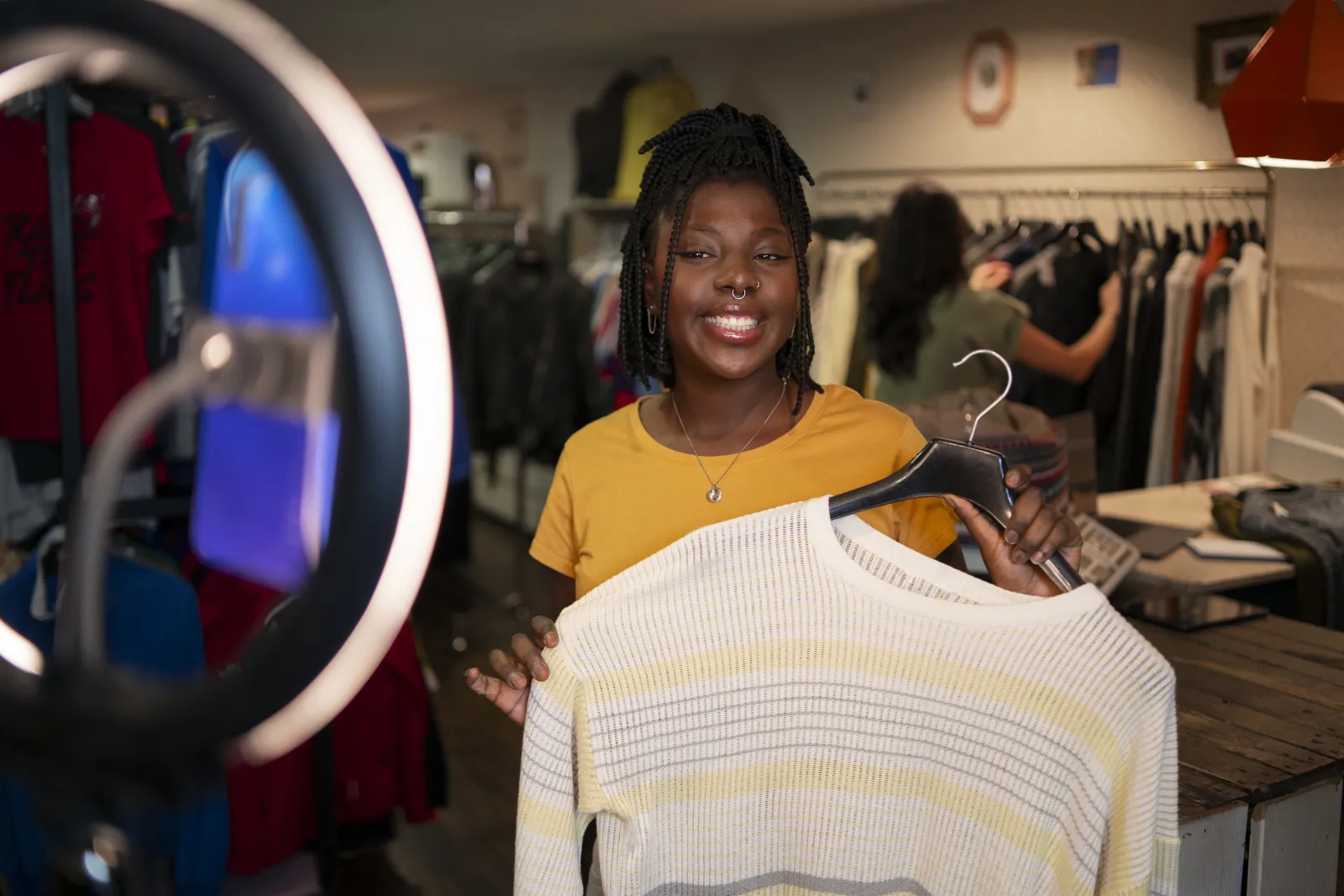
Why electronics sell differently in live shopping
Unlike fashion or beauty, buying electronics is a considered purchase: the buyer wants to be sure the product works, that it's authentic, and that it matches exactly what's described. Live shopping is particularly effective here because it lets you demonstrate the product's real functioning — a test neither a photo nor a classic product page can offer.
Preparing a tech live that reassures
- Test every device before the live — nothing loses credibility faster than a product that won't turn on live in front of the audience.
- Keep the technical specs close at hand — battery capacity, compatibility, warranty. Technical questions come thick and fast.
- Prepare proof of authenticity — for branded products, show the sealed packaging, the serial number or anything that reassures about the product's origin.
- Have a stable connection — a tech live interrupted by cutouts particularly damages the credibility of an electronics seller.
Presentation techniques that sell
Demonstrate the key feature first
Every electronic product has one feature that justifies the purchase — a pair of earbuds' battery life, a phone's camera quality, a speaker's power. Always start by demonstrating that feature live rather than listing specifications.
Compare with familiar benchmarks
"This battery lasts a full day of normal use" speaks louder than a number in mAh. Translate technical specs into concrete usage for your audience.
Show the included accessories
Unbox the product at the camera and show exactly what's included in the box — cable, charger, manual. That avoids post-purchase disappointment and repeated chat questions.
Answer compatibility questions right away
"Is it compatible with my phone model?" is the most frequent question in tech lives. Have a compatibility chart ready to share live so you can answer without delay.
Handling warranty and after-sales service
Electronics generates more after-sales questions than most other categories. Clearly state your warranty policy before each sale — duration, what's covered, how to proceed in case of a fault. That upfront clarity is often what tips a hesitant buyer.
Structuring a tech live from A to Z
- Opening (2-3 min): present the day's selection and the type of products (accessories, audio, smartphones)
- Body of the live: product-by-product demonstration with live testing and technical answers
- Regular pushbacks: remind viewers of the purchase link, stock and warranty policy
- Closing: recap the available products and the new items in the next shipment
FAQ: Selling Electronics in Live Shopping
How do you prove an electronic product's authenticity live?
Show the sealed packaging, the serial number and, if possible, the supplier invoice. Being transparent about the product's origin strongly builds buyer trust.
What do you do if a product breaks down during the demonstration?
Stay transparent — announce the problem rather than hiding it, offer to test another unit, and reassure about your warranty policy. Honest handling of an unexpected issue usually strengthens credibility more than it hurts it.
Do you need to know every technical spec by heart?
No, but keep them accessible during the live (product page open beside the camera) to answer quickly without making the audience wait.