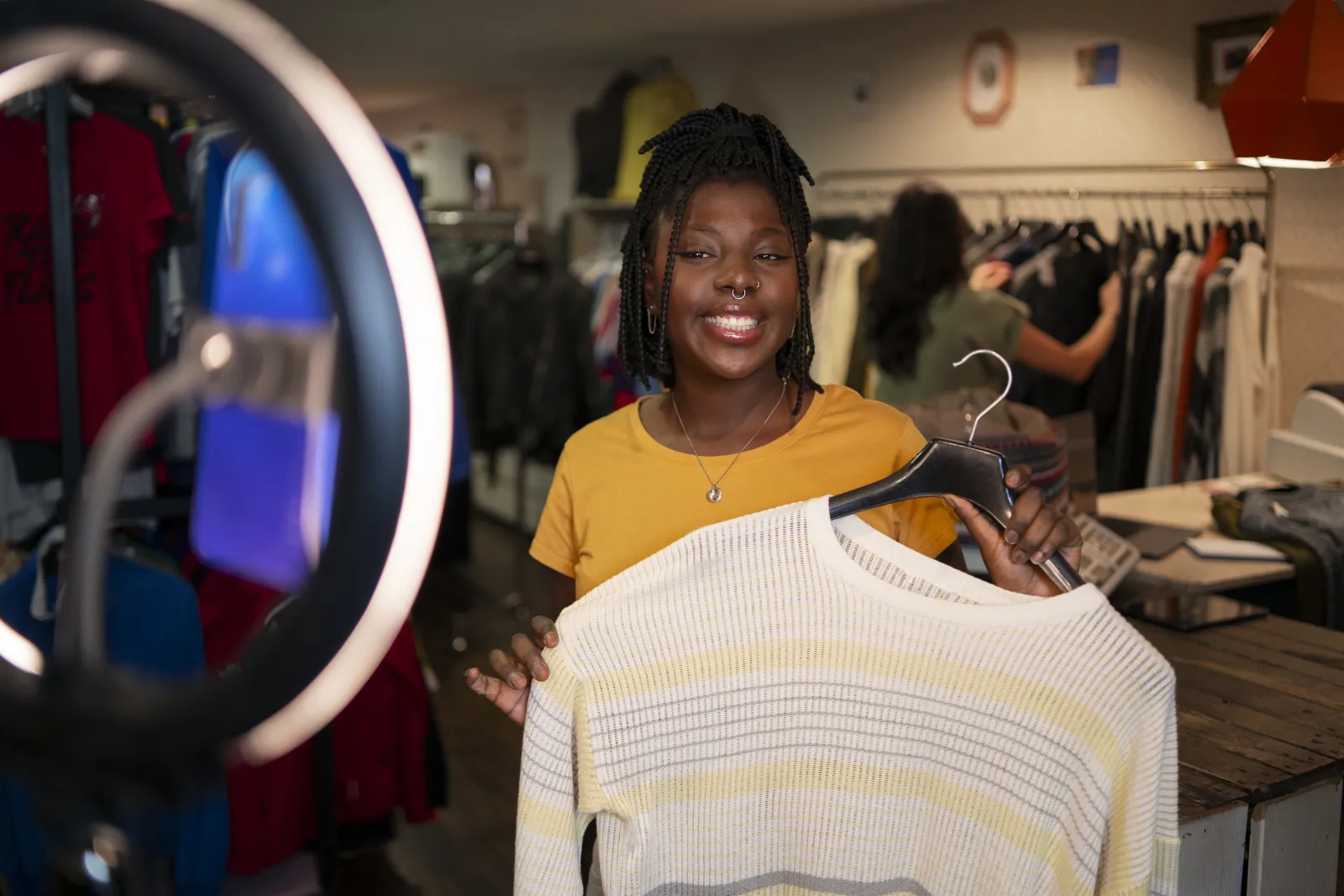
Why fashion and thrift are tailor-made for live shopping
Few product categories lend themselves to live shopping as well as fashion and thrift. A static photo never shows how a fabric drapes, how a color looks in daylight, or the actual fit on a body. Live streaming solves this in one shot: your viewers see the garment move, worn, from several angles, and can ask all their questions before buying. That is exactly what a classic online store is missing — and exactly what SuguLive provides.
Prep your inventory before going live
A successful fashion live is prepared beforehand, not on the spot. Before you turn on the camera:
- Sort into coherent lots — one "summer shirts" live, another "evening dresses" live, rather than a mix with no thread tying it together. Buyers stay longer when they know what to expect.
- Check every piece — a thrift item with a flaw that isn't mentioned on air creates dissatisfaction and returns. Always mention the real condition of the piece.
- Note sizes and measurements ahead of time to answer instantly without measuring on air while your audience waits.
- Set up a mannequin or wear the pieces yourself — seeing the item worn converts far better than a garment laid flat.
Presentation techniques that drive sales
Show movement, not just the piece
Spin around, walk, sit down while wearing the garment. For thrift in particular, movement reassures viewers about the quality of the fabric and the real fit — two pieces of information a photo never provides.
Tell the story of the piece
For second-hand clothing, the origin and style of a piece are part of its value. A vintage jacket, a piece from a recognized brand, a rare fabric: say it. Thrift buyers purchase a story as much as a garment.
Create complete looks
Don't present an isolated item — put together a full outfit with accessories. This naturally increases the average basket: the buyer who came for a shirt leaves with the shirt and the matching pants.
Use scarcity honestly
In thrift, every piece is unique by nature — unlike new items, there is no restock. Just remind them simply: "this piece exists in only one copy." It is a genuine urgency argument, not an artificial technique.
Handling size and return questions
Fashion is the category that generates the most live size questions. Anticipate them with a size chart displayed on screen or in the description, and a clear return policy announced before every sale. On SuguLive, list your return policy in your product catalog to reassure buyers even before the question comes up in chat.
Pacing a fashion live from start to finish
- Opening (2-3 min): present the theme of the live and the number of pieces available
- Main body of the live: present each piece individually — 2 to 4 minutes per item, with try-on and questions
- Regular prompts: remind viewers of the purchase link and the number of pieces left every 10 minutes
- Closing: recap the pieces still available and announce the date of the next live
Building a lasting fashion community
The best fashion and thrift sellers on SuguLive don't do a one-off live — they build a regular appointment. A weekly live at a fixed time turns occasional buyers into loyal customers who wait for your next selection. Each new arrival becomes an event rather than a simple product upload.
FAQ: Selling Fashion and Thrift with Live Shopping
Do you need a mannequin to sell thrift live?
No, it's not required — many sellers wear the pieces themselves, which also creates a closeness that audiences appreciate. A mannequin is useful for high-volume sellers who go through many pieces per live.
How do you price second-hand pieces in live shopping?
Base your price on the condition, brand, and rarity of the piece, and be transparent about those criteria on air. Transparency about the item's real condition sharply reduces post-purchase return requests.
How often should a fashion seller host lives?
A fixed weekly rhythm works better than an irregular one: it creates a habit among your buyers and simplifies your inventory management, especially for thrift where every arrival is unique.